Clean Garden Edge – Removing Mice & Rats from the Compost Area
🛡️ Thorough Nest & Root-Cause Remediation
If you hear scratching and scurrying noises around the garden, raised beds, or facade at night, compost and organic waste are often the main attractions. With non-toxic immediate measures, clean disruption of pathways, and safe prevention, rodents can be effectively repelled even in households with pets.
Required Tools & Preparation
1 paircut-resistant work gloves
1-2 piecesFFP2 respiratory masks
2-4 rollssturdy garbage bags for securely disposing of nesting material
1 bottleenzymatic cleaner for odor and trail removal
4-6 piecesnon-toxic snap traps with child-safe pet protection box
1-2 kgbait material such as peanut butter or oats for traps
1 setinspection lamp and marking tape for tracking pathways
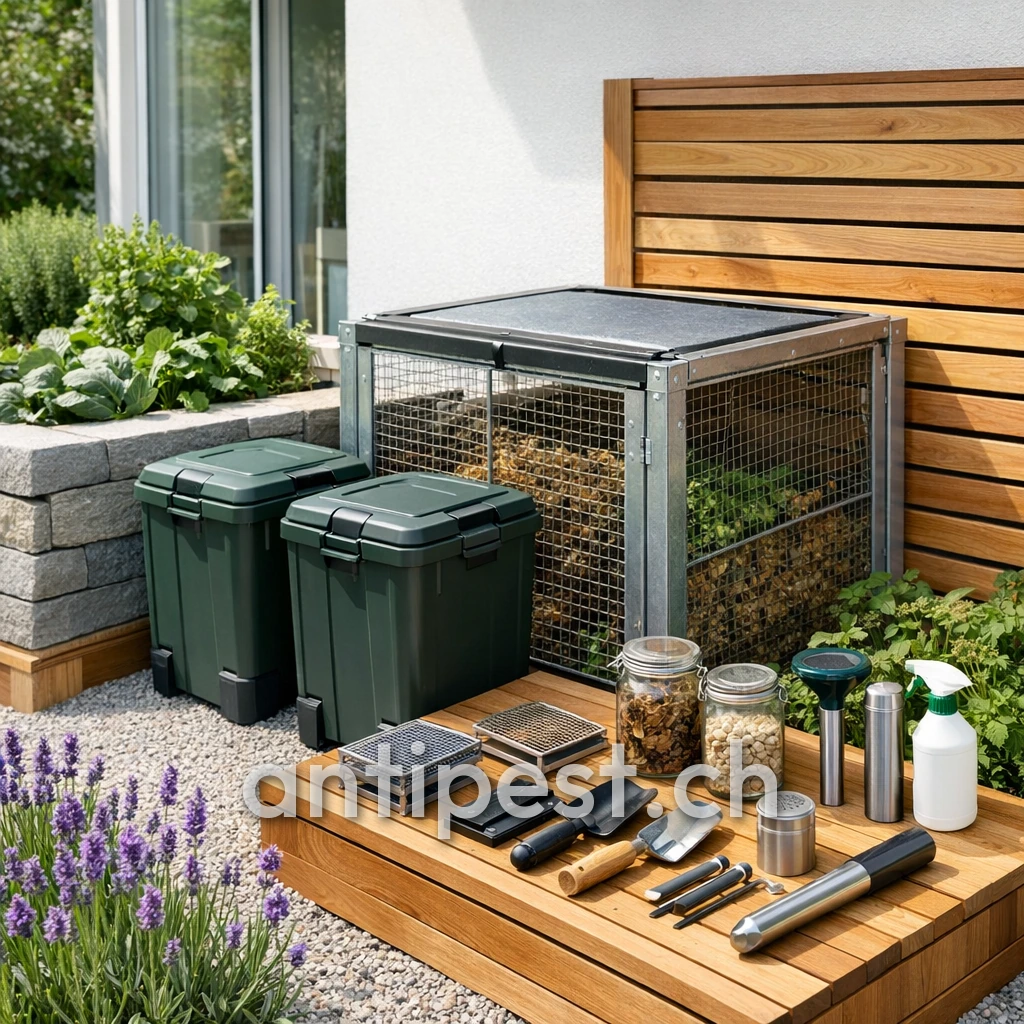
2-5 m²galvanized wire mesh with small mesh size for compost and lower edges
2-4 cartridgesweather-resistant sealant or rodent steel wool for gaps and passages
1 setmetal bucket or tightly closing organic waste container
Step-by-Step Action Plan
Immediate Containment & Acute Security: Remove openly accessible food sources around the compost, raised beds, and facade on the same day. Organic waste, fallen fruit, bird feed, and pet food should be stored in tightly closing containers, especially if pets are present in the household. Keep children and pets away from the affected area and secure only mechanical traps in locked protection boxes to prevent accidental contact.
Cause, Pathway & Nest Location: Check typical pathways along walls, bed edges, wood piles, and behind the compost at dusk or early morning. Look for droppings, smear marks, small soil excavations, gnawed materials, and entry holes at foundations, facades, or under raised beds. Mark active spots with tape or chalk and note where scratching and scurrying noises are most noticeable at night.
Targeted Non-Toxic Control & Application: Place non-toxic snap traps always perpendicular to the wall with the trigger facing the pathway, as mice and rats prefer to run covered. Position the traps exclusively in sturdy protection boxes near compost, facade edges, or under protected border areas, but never freely accessible to pets. Check daily, renew bait sparingly, and relocate ineffective traps after 2 to 3 nights to proven active pathways.
Hygienic Deep Cleaning & Pathway Disruption: Remove nesting material, loose plant debris, and contaminated leftovers with gloves and pack everything tightly in garbage bags. Clean affected hard surfaces, compost surroundings, base areas, and access points with an enzymatic cleaner to destroy odor marks and trail signs. Regularly sweep or rinse away food remnants at the garden edge, as even small organic residues maintain infestation pressure.
Structural Sealing & Long-Term Prevention: Secure the compost from below and the sides with tightly meshed galvanized wire mesh to prevent undermining or lateral entry. Seal gaps, pipe passages, base cracks, and transitions at the facade with suitable sealant and rodent steel wool; openings larger than about 6 mm are already relevant for mice. Store wood, mulch, and bags away from the house wall, keep the garden edge low-growing, and maintain raised beds clean without permanent food sources.
Swiss Professional Traffic Light (When to Call a Professional?): Green indicates single tracks without new activity after 7 to 10 days of consistent measures. Yellow applies to multiple active holes, recurring nighttime noises, or if sensitive areas like facade gaps, basement connections, or animal husbandry zones are affected. Red indicates heavy droppings, visible rats during the day, recurring infestations despite traps and sealing, or if nests are suspected in construction cavities; then a Swiss professional is needed for precise location and safe remediation.
🛡️ Prevention & Beneficials Matrix
Active Mechanisms & Long-Term Protection
Non-toxic physical barriers and biological beneficials. Click any card to open the scientific dossier.
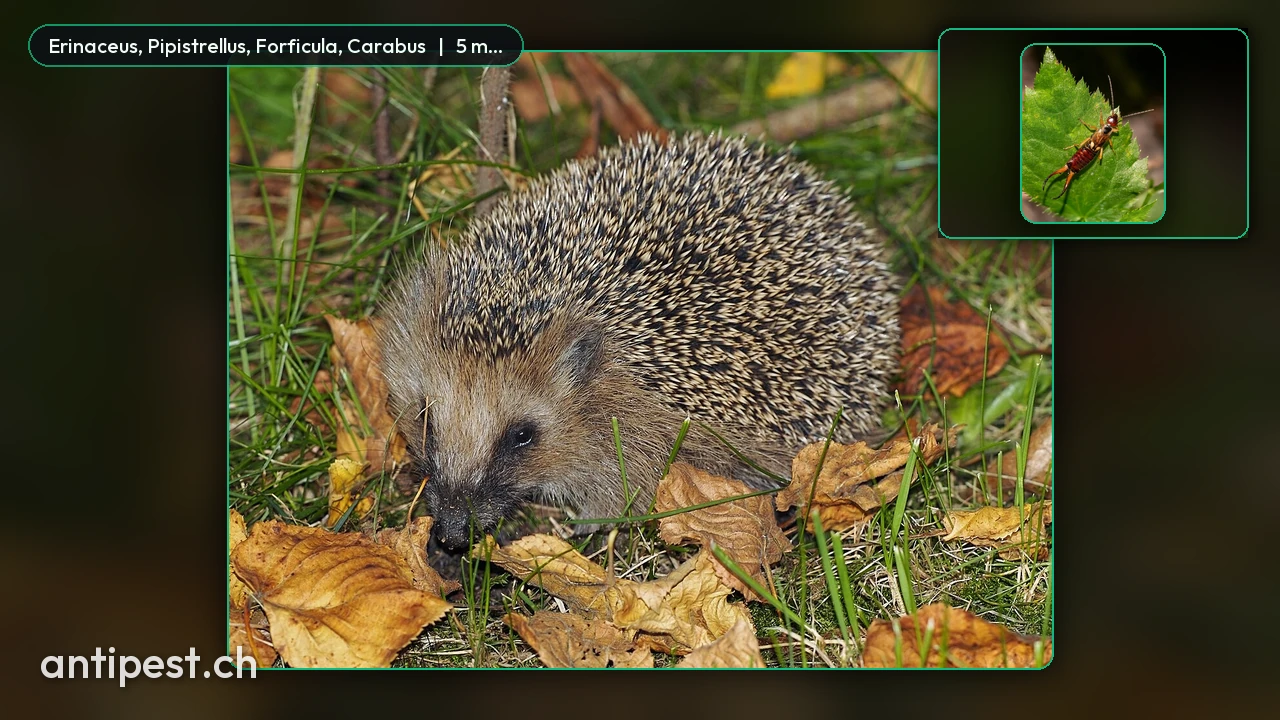
Hedgehogs, Bats, Earwigs & Ground Beetles in the Garden
A single pipistrelle bat catches up to 3,000 mosquitoes per night, and the seemingly annoying earwig eats hundreds of aphids every night in its wool sleeping bag!
Pheromones, Attractants & Why Traps Alone Are Not Enough
Why pheromone sticky traps in the cupboard only catch males – and why hanging them directly at an open window is a fatal mistake! The science of monitoring.
Essential Oils: Lavender, Cedarwood, Neem & Geraniol
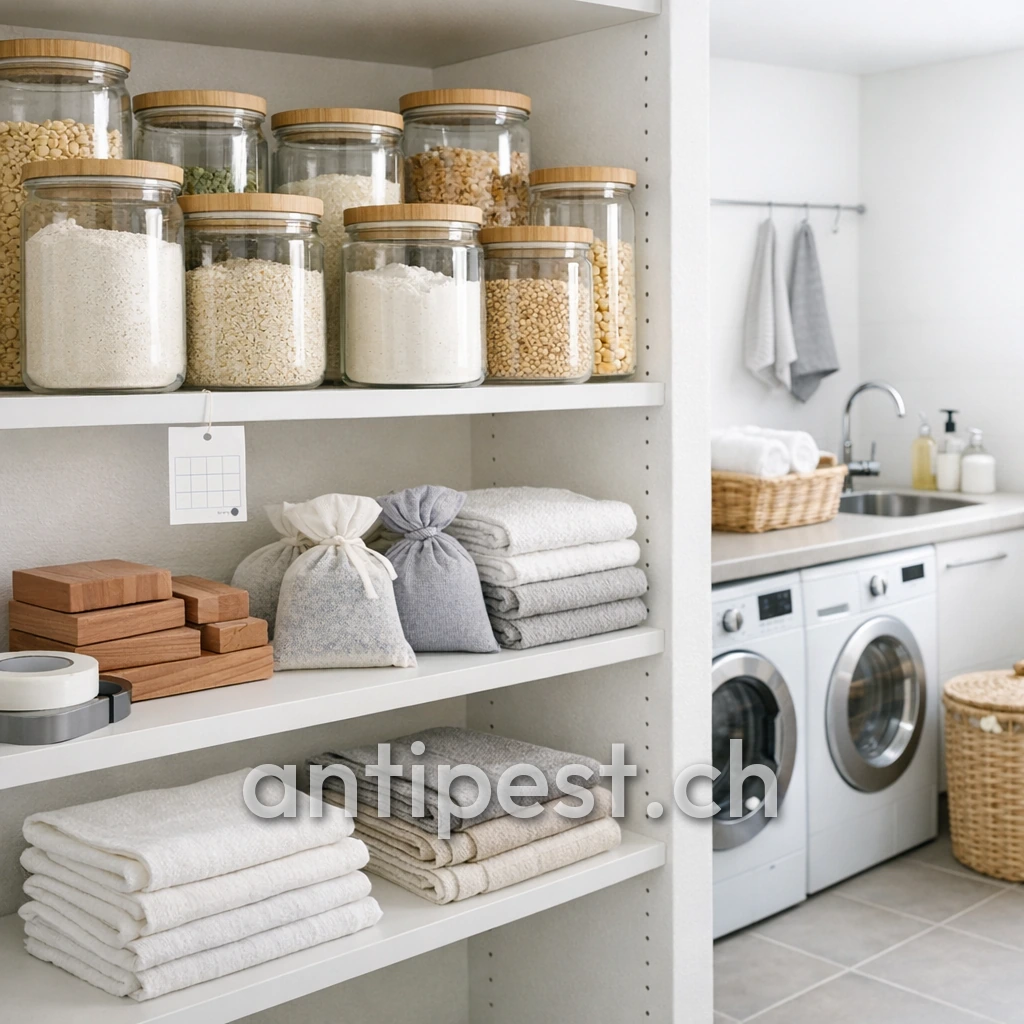
How plant terpenes (Linalool, Cedrol, Eugenol, and Azadirachtin) block the odor receptors of moths, ants, and wasps – and why cedarwood needs to be sanded every 3 months.
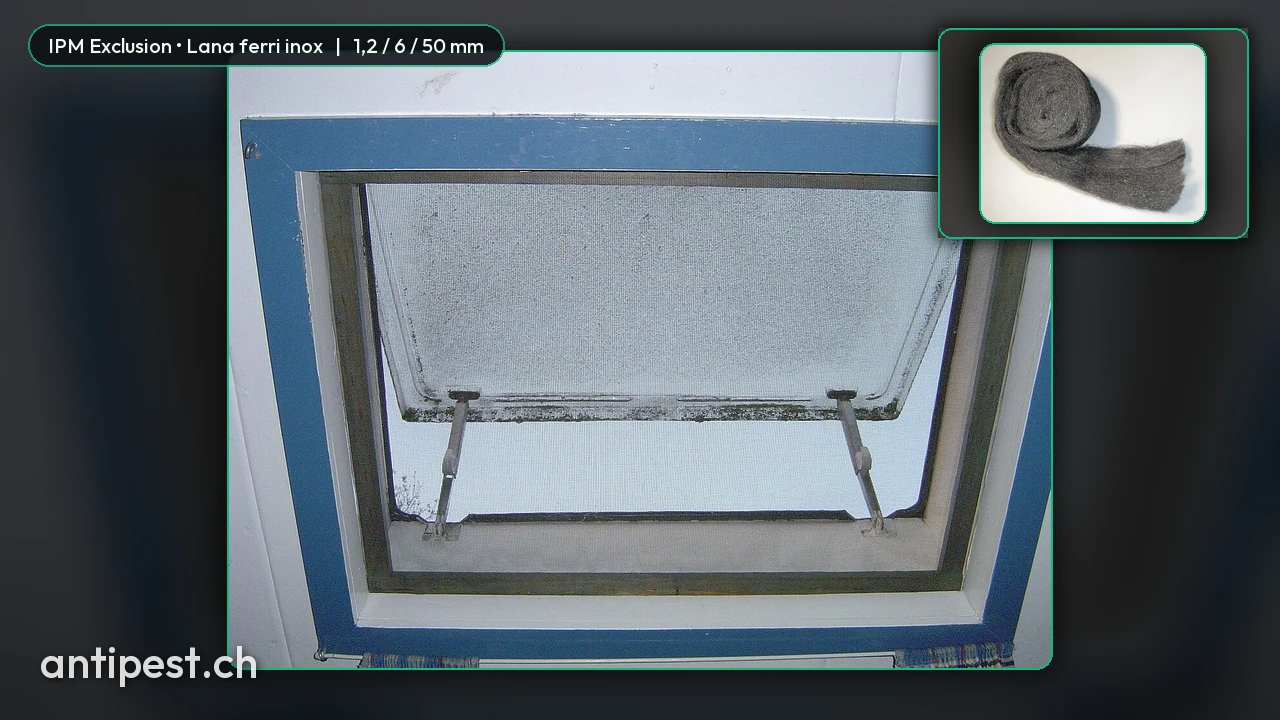
The best pest is the one that never enters the house: the exact gap dimensions (1.2 mm for insects, 6 mm for mice, 50 mm for martens) and why construction foam alone never protects against rodents.
🔬 Pest Biology & Identification
Species Identification, Lifecycle & Root Causes
Understanding species biology is key to solving the root cause. Click any dossier for the full analysis.
House Mouse vs. Field Mouse (Mus musculus vs. Apodemus)
Where a pencil (6 mm!) fits, a mouse can also fit! How to distinguish the house mouse from the protected field mouse and why peanut butter is far superior to ham as bait.
Brown Rat & House Rat (Rattus norvegicus)
Highly intelligent cultural followers with pronounced 'neophobia' (distrust of new objects): why open compost heaps and bird feed in the garden are the main cause.
Field Mouse / Water Vole vs. Mole in the Garden
Who is digging up your lawn? The mole is a strictly protected insect hunter, while the water vole eats plant roots! With the disturbance test, you can immediately identify the culprit.
Nighttime thumping and whistling in the attic between June and October? Often it's not a marten, but the strictly protected dormouse with its bushy tail!