Green Shield – Boxwood Moth & Aphids in the Garden
🛡️ Biological Beneficials & Pheromone Traps
Boxwood moths and aphids can be effectively controlled in the garden, raised beds, and on facades if you act early. By using beneficial insects, pheromone traps, and thorough monitoring of fine webs in packaging, you can stop the infestation in a non-toxic and sustainable manner.
Required Tools & Preparation
2–4 piecesPheromone traps for boxwood moths
1–2 setsParasitic wasp cards for preventive application and monitoring
1 pairGarden-safe protective gloves
1 pieceHand shears or boxwood shears
1–2 bagsSeal-able green waste or trash bags
1 pieceHand spray bottle with water
200–500 mlPotassium soap solution or ready-to-use soft soap spray solution
1 pieceSoft hand broom or small brush
1 rollSealing tape or insect mesh for ventilation and facade openings
Step-by-Step Action Plan
Immediate containment & acute security: Inspect boxwood, raised bed edges, and facade areas immediately for feeding damage, webs, and sticky aphid colonies at shoot tips. Remove heavily infested shoots immediately with shears and pack the cuttings directly into sealable bags to prevent the spread of caterpillars or eggs. Also, check for fine webs in plant packaging, pots, or stored garden materials and dispose of or clean suspicious materials immediately outside the bed.
Cause, pathway & nest location: Examine the boxwood bushes from the outside in, as young caterpillars often hide in the dense interior and remain unnoticed at first. Aphids tend to gather on soft new shoots, buds, and warm, sheltered areas of facades; additionally, check for ant activity as an indication of honeydew. Hang pheromone traps near the boxwood plants, but not directly in the dense foliage, to reliably monitor moth flight and identify the right time for further measures.
Targeted non-toxic control & application: First, rinse aphids off with a strong jet of water and treat remaining colonies specifically with a potassium soap solution, ensuring that the undersides of leaves and young shoots are thoroughly wetted. Parasitic wasp cards are suitable for biological support in the infestation environment and for stable prevention, especially when fine webs repeatedly appear in packaging or on stored plant materials. The pheromone traps primarily serve to monitor the boxwood moth; if there is a heavy caterpillar presence, visible caterpillars and webs must also be removed mechanically to quickly reduce pressure.
Hygienic deep cleaning & disruption of traces: Carefully sweep away eaten leaves, caterpillar droppings, and remnants of webs under and within the boxwood plants, as developmental stages can survive protected in these materials. Thoroughly clean shears, gloves, boxes, and reused packaging with warm water to prevent the spread of eggs, larvae, or honeydew residues. Keep the ground around the boxwood free of cuttings and check adjacent plant containers, trellises, and facade corners for hidden retreat areas.
Structural sealing & long-term prevention: Seal unnecessary gaps at nearby ventilation openings, tool sheds, or facade passages with sealing tape or suitable protective mesh to make it harder for moths and other subsequent pests to settle. Promote beneficial insects through diverse planting, moderate fertilization, and good air circulation, as over-fertilized soft shoots particularly attract aphids. Inspect boxwood and raised beds weekly from April to September, renew pheromone traps according to manufacturer instructions, and respond to the first signs of webs or fresh aphid nests.
Swiss professional traffic light (When to call in a specialist?): Green: Individual aphid nests, few fresh webs, or isolated moth captures can usually be safely managed with the mentioned measures if checked weekly. Orange: Recurring infestations despite cleaning, multiple pruning, and ongoing monitoring indicate hidden infestation sources or unfavorable site factors and should be assessed by a professional. Red: If entire rows of boxwood are defoliated, facade plantings are extensively affected, or the infestation spreads rapidly despite repeated biological measures, it is advisable to consult a Swiss professional for a systematic IPM strategy.
🛡️ Prevention & Beneficials Matrix
Active Mechanisms & Long-Term Protection
Non-toxic physical barriers and biological beneficials. Click any card to open the scientific dossier.
Barely visible to the naked eye (0.4 mm) yet nature's most effective moth hunters: how Trichogramma dispenser cards track down every pantry moth and clothes moth egg in the cupboard.
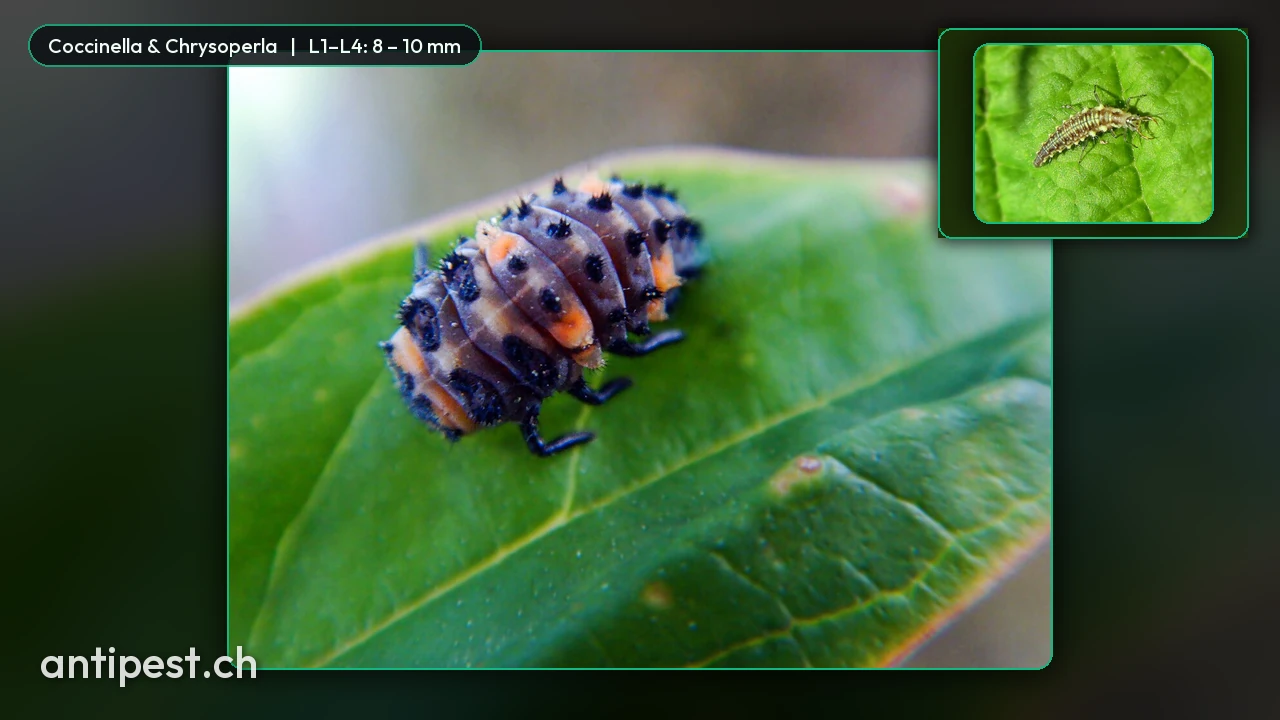
Did you know that a single inconspicuous, crocodile-shaped ladybird or lacewing larva ("aphid lion") can consume up to 600 aphids during its 2-week development?
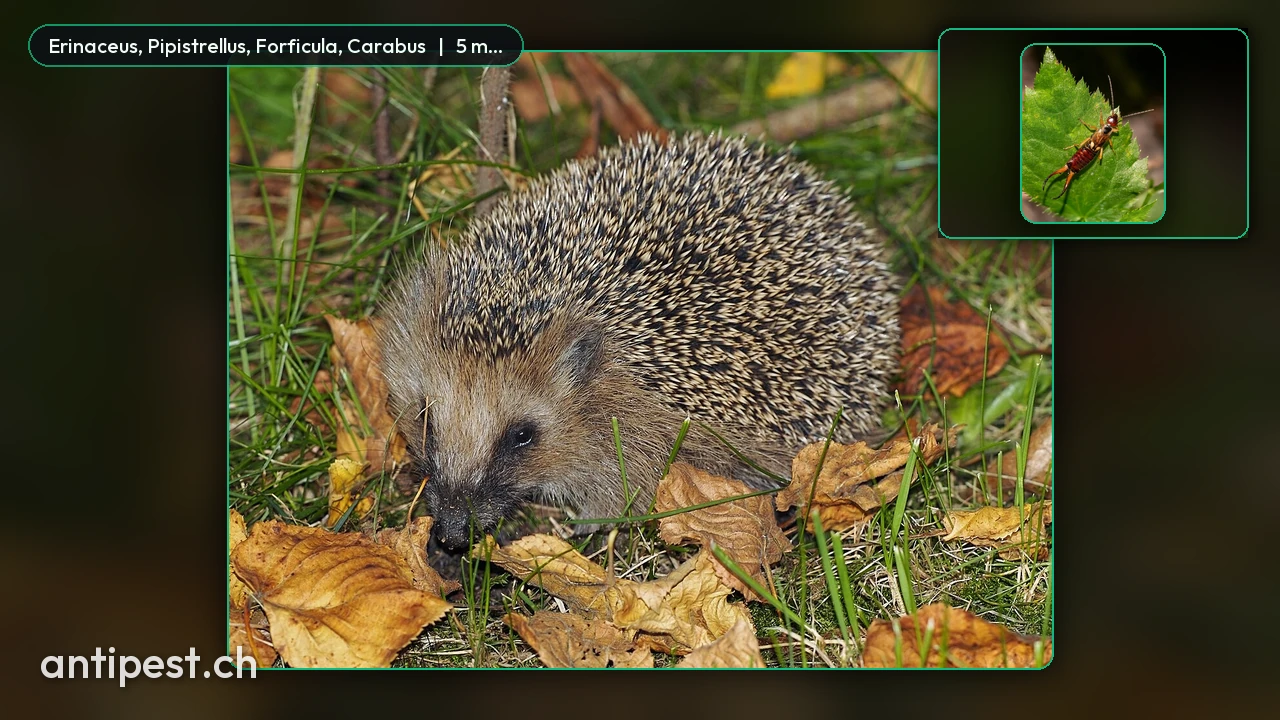
Hedgehogs, Bats, Earwigs & Ground Beetles in the Garden
A single pipistrelle bat catches up to 3,000 mosquitoes per night, and the seemingly annoying earwig eats hundreds of aphids every night in its wool sleeping bag!
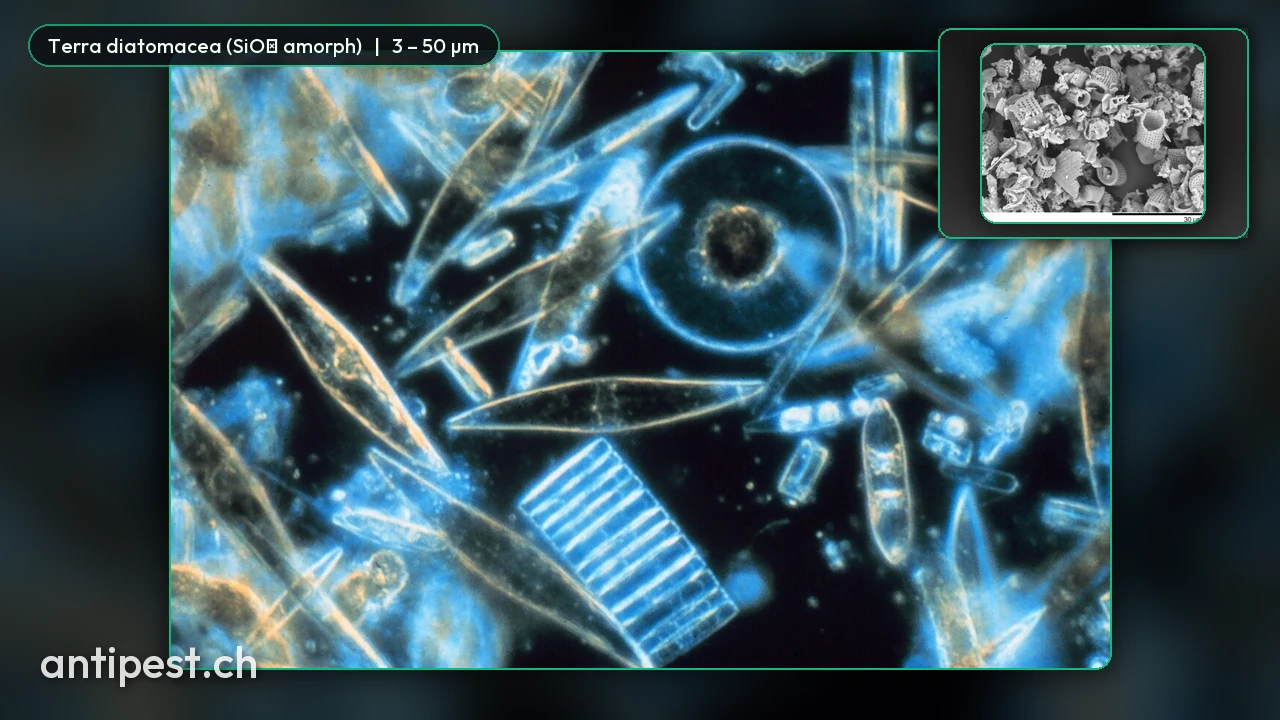
Kieselgur (Diatomaceous Earth): Physical Drying
Microscopic shells of fossilized diatoms made of pure silica: Why kieselgur physically breaks the protective wax layer of silverfish, ants, fleas, and bedbugs.
🔬 Pest Biology & Identification
Species Identification, Lifecycle & Root Causes
Understanding species biology is key to solving the root cause. Click any dossier for the full analysis.
Box Tree Moth & Black Vine Weevil (Otiorhynchus sulcatus)
Boxwoods eaten bare or half-moon shaped «notches» on the leaf edges of cherry laurel and rhododendron? How Bt bacteria and HM nematodes selectively stop both garden pests.
Aphids (Aphidoidea) & The Ant Symbiosis
Aphids give birth in spring to living clones without mating every day! Why ants defend them like dairy cows against ladybugs and how potassium soap + glue ring break the chain.
Silvery spots on Monstera or citrus plants in winter? Dry heating air triggers an explosion of spider mites and thrips. Humidity, rapeseed oil, and predatory mites help.
Mealybugs (Cottony Scales) & Scale Insects on Plants
White, cottony webs in the leaf axils of orchids or brown bumps on olive and citrus trees: how an oil-soap emulsion breaks their water-repellent protective shield.