Bed bugs often enter cellars, laundries, and attics through luggage, textiles, or stored items. Key factors are 24-hour isolation, heat/cold treatment, and thorough sealing.
Required Tools & Preparation
1–2 rollsSealant tape for joints, door gaps, and base connections
1–2 m²Fine mesh insect screen for ventilation openings
4–8 piecesAir-tight jars for small items, screws, and found objects
6–12 piecesSturdy sealable laundry or garbage bags
1 deviceWashing machine with hot wash at 60 °C
1 deviceFreezer with a temperature of at least −18 °C
1 deviceVacuum cleaner with bag
1 rollAdhesive tape for immediate sealing of bags and containers
1 pairWashable work gloves
1 pieceFlashlight for gap inspection
Step-by-Step Action Plan
Immediate containment in the first 0–2 hours: Do not move affected luggage, laundry baskets, blankets, and stored textiles between rooms. Place all suspicious items directly in sealable bags, tie them immediately, and collect them in the laundry room as a control zone. Open luggage only on smooth, visible surfaces, never on upholstered furniture or wooden surfaces. Vacuum up visible bugs or skin castings; immediately place the vacuum bag into a sack, seal it, and dispose of it.
Identification of causes and nesting: Use a flashlight to check seams of bags, blankets, stored textiles, wooden gaps, baseboards, cardboard boxes, shelf surfaces, and wall connections in the cellar, laundry room, and attic. Typical signs include small dark fecal spots, light skin castings, and clusters in tight crevices near stored fabrics. Place small items or suspicious samples in air-tight jars and label them to prevent cross-contamination.
Targeted treatment & protective barrier: Wash all washable textiles immediately at 60 °C and dry them thoroughly. Individually pack non-washable, cold-resistant items and freeze them at −18 °C for at least 4 days; for densely packed items, it’s better to keep them longer. Secure ventilation openings with insect screens and temporarily seal joints, door gaps, pipe passages, and shelf joints with sealant tape to prevent bed bugs from spreading to other utility rooms.
Hygienic deep cleaning: Thoroughly vacuum empty shelves, floor edges, bases, and crevices, working from top to bottom. Sort out boxes as much as possible since they offer many hiding spots; repack contents into smooth, well-controllable containers or sealable bags. After cleaning, only return clean, already treated textiles and create clear zones: untreated, in treatment, released.
Structural sealing & long-term prevention: Permanently seal all recurring hiding spots at door frames, baseboards, pipe passages, and ventilation openings. Check luggage immediately in a secure sluice in the cellar or laundry room after trips, placing contents immediately into bags or for 60 °C washing, and store luggage separately. Only store textiles in the attic in well-sealed containers and conduct regular inspections.
Swiss professional traffic light (Green / Yellow / Red): Green = single find on luggage or individual textiles, no further traces after 14 days of monitoring. Yellow = repeated findings in several bags, shelves, or rooms despite hot washing, freezing, and sealing; in this case, involve a certified Swiss pest controller within 24–72 hours. Red = bites in living areas, bugs on bed frames, large-scale traces or spread from cellar/laundry/attic to bedrooms; immediately arrange professional bed bug treatment and do not move any items uncontrolled until then.
🛡️ Prevention & Beneficials Matrix
Active Mechanisms & Long-Term Protection
Non-toxic physical barriers and biological beneficials. Click any card to open the scientific dossier.
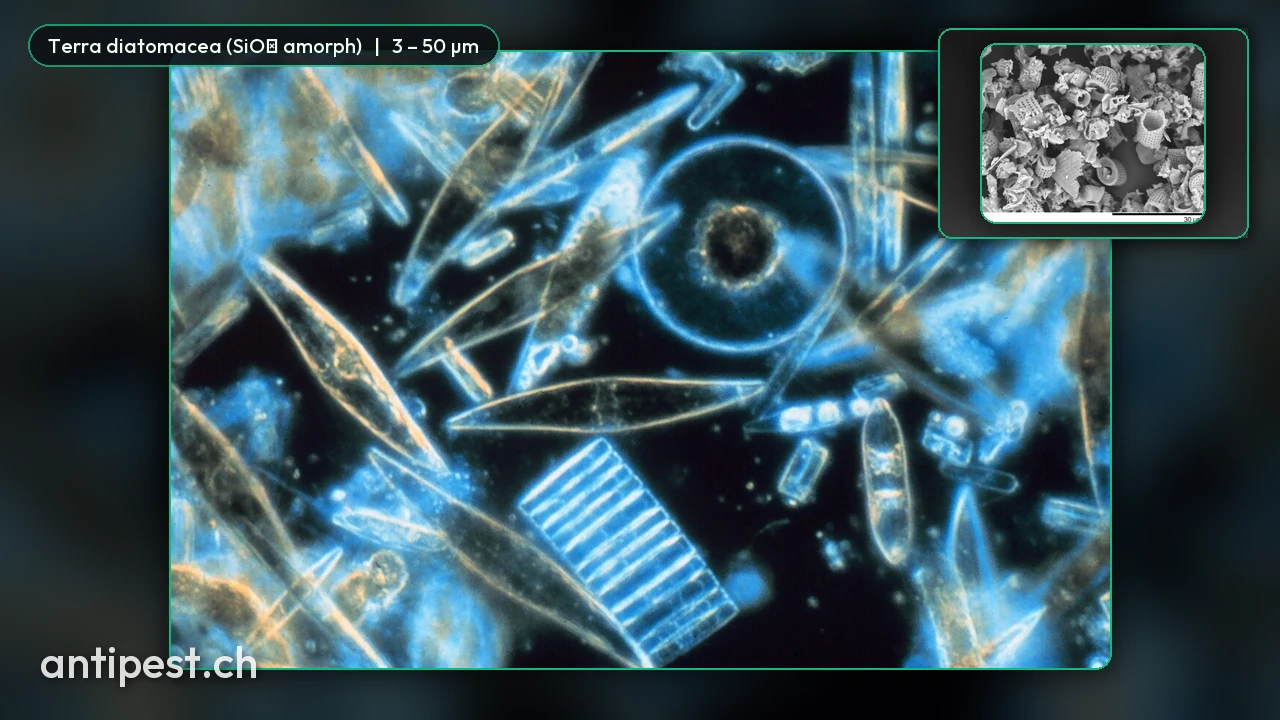
Kieselgur (Diatomaceous Earth): Physical Drying
Microscopic shells of fossilized diatoms made of pure silica: Why kieselgur physically breaks the protective wax layer of silverfish, ants, fleas, and bedbugs.
Thermal Elimination: The +55 °C Heat & -18 °C Cold Threshold
No insect egg survives +55 °C for 60 minutes or -18 °C for 72 hours! How to use the oven, hairdryer, 60-degree wash, and freezer as a 100% residue-free bio chamber.
Indoor Climate Control: Humidity (< 55 %) & Dew Point
Silverfish, dust mites, and pillbugs cannot drink liquid water – they absorb moisture from the air! Below 50–55 % humidity, they dry out.
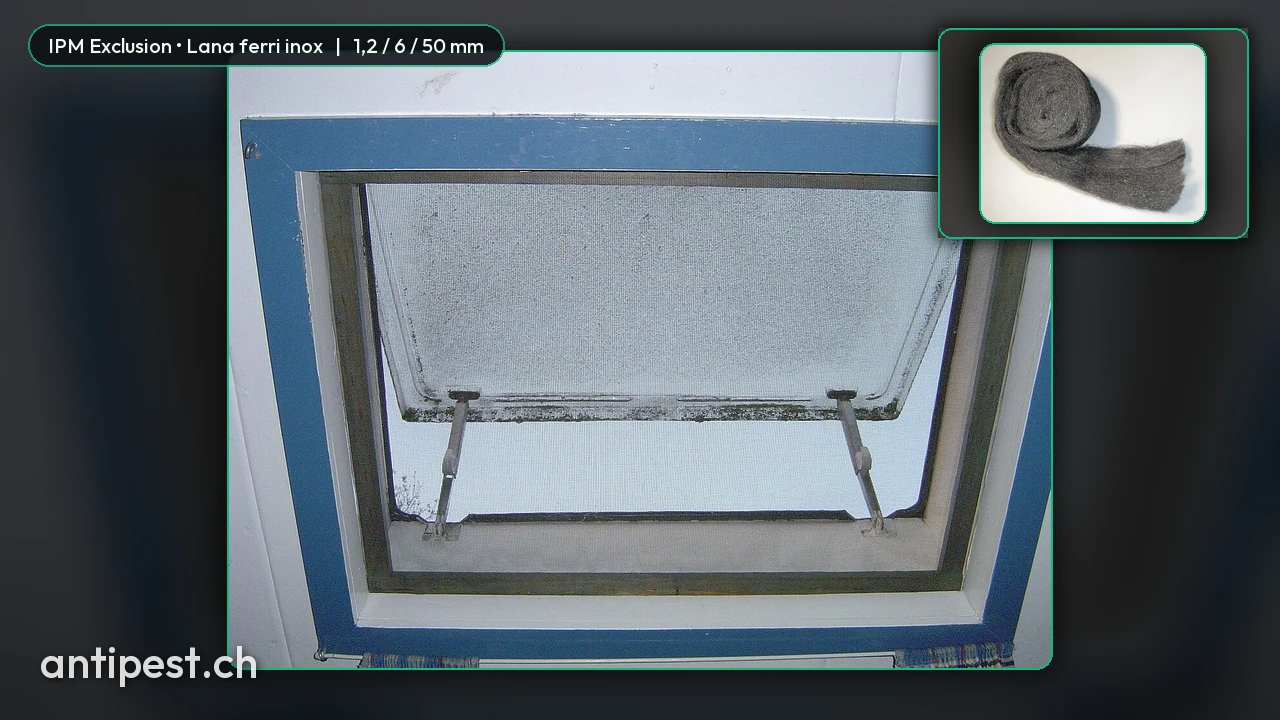
The best pest is the one that never enters the house: the exact gap dimensions (1.2 mm for insects, 6 mm for mice, 50 mm for martens) and why construction foam alone never protects against rodents.
🔬 Pest Biology & Identification
Species Identification, Lifecycle & Root Causes
Understanding species biology is key to solving the root cause. Click any dossier for the full analysis.
Bed Bug (Cimex lectularius): Identification & Travel Protection
Nocturnal bloodsuckers with no hygiene connection: Bed bugs are brought in luggage from hotels. How to recognize fecal stains on the mattress seam and why 60 °C dry steam kills them instantly.
Cat & Dog Flea (Ctenocephalides felis)
Only 5% of the flea population is found as adult fleas on pets – a full 95% are dormant as eggs, larvae, and vibration-sensitive pupae in carpets, sofas, and pet beds!
German Cockroach vs. Amber Wood Cockroach
80% of all reported 'cockroaches' in summer in Switzerland are actually completely harmless amber wood cockroaches! With the pronotum and light test, you can distinguish them in 5 seconds.
House Dust Mite (Dermatophagoides pteronyssinus)
These tiny 0.3 mm arachnids in the bed do not bite, but their allergenic fecal particles cause morning sniffles and asthma. With encasings, 60 °C washes, and air humidity < 55 %, you can stop them.