Safe Timber – Early Prevention of Wasp Nests in the Attic
🛡️ Long-Term Prevention & Pro Assessment
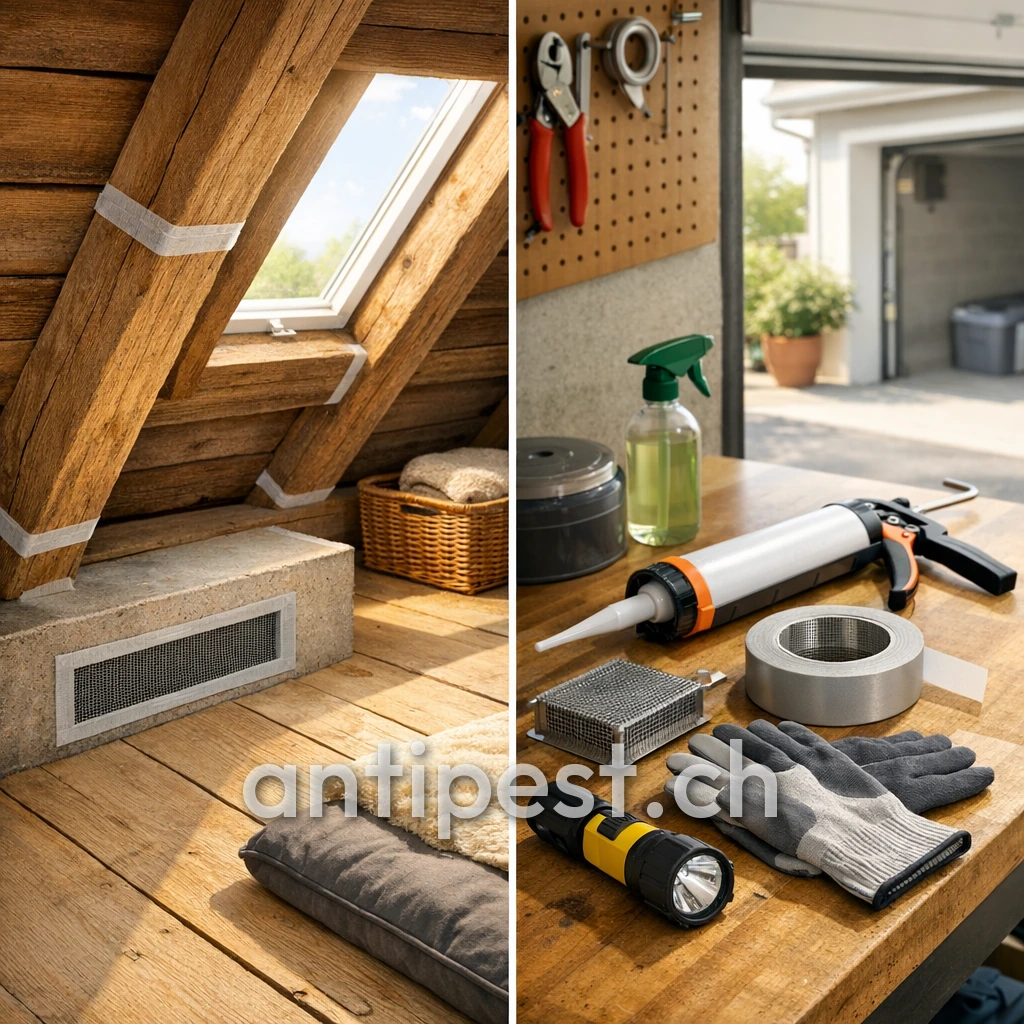
Wasps prefer to use old timber, cracks, and protected cavities in attics, garages, and sometimes in engine compartments as nesting sites. With early inspection, non-toxic barriers, and clear professional assessment, the risk to humans and pets can be significantly reduced.
Required Tools & Preparation
1 setfine-mesh insect screens for ventilation openings and entry points
2-3 rollsweather-resistant sealing tapes for gaps, joints, and connections
1-2 cartridgeselastic sealant for small cracks in wood and masonry
1 pairsting-resistant protective gloves
1 piecesafety goggles with side protection
1 pieceflashlight or inspection light for attic and garage
1 piecehand mirror or small inspection mirror for hard-to-see cavities
2-4 clothsmicrofiber cloths for dust-free cleaning of pathways and surfaces
500 mlmild soapy water for gentle surface cleaning
1 piecenotepad or mobile photo documentation for observations
Step-by-Step Action Plan
Immediate Containment & Acute Security: Maintain distance from all suspected entry points in the attic, garage, and around the engine compartment, and avoid vibrations on the old timber. Secure windows, ventilation slots, and secondary entrances with existing screens or closed doors to prevent wasps from entering living areas. Pets should be kept away during the inspection, especially curious dogs and cats near the garage. Never attempt to smoke out, knock down, or treat an active nest with water.
Cause, Pathway & Nest Location: Observe the flight direction of the wasps from a safe distance during daylight, ideally during calm periods without hustle. Typical signs include regular entries and exits at cracks, formwork joints, eaves areas, behind boards, or through small openings in garage doors. In the engine compartment, recurring wasps at the same spot indicate a protected cavity, making a visual inspection before each drive advisable. Document the location, time, and activity level for targeted follow-up measures without gaps.
Targeted Non-Toxic Control & Application: For individual foraging wasps without a visible nest, the focus is not on extermination but on immediate prevention of entry. Install fine-mesh insect screens at non-critical openings and apply sealing tapes only where there is no longer any active wasp traffic. Small, unoccupied gaps in wood or masonry can be sealed with suitable sealant after the area has remained wasp-free for several days. An already active nest must not be handled or sealed independently for safety and animal welfare reasons.
Hygienic Deep Cleaning & Disruption of Trails: Clean adjacent surfaces, window sills, shelves, and garage areas with mild soapy water to remove attractive residues and dust nests. In the engine compartment, cleaning is limited to cold, parked vehicles and easily accessible areas without interfering with technical components. Open sweets, pet food, beverage residues, and sticky containers should not be stored near potential entry points. Regular cleaning reduces disturbances and makes the area less attractive for new founders.
Structural Sealing & Long-Term Prevention: Inspect old timber seasonally for new cracks, loose boards, open eaves gaps, and unprotected ventilation openings. Permanently add suitable protective screens and renew aged sealing tapes to prevent preferred founding points from forming in spring. In the garage and attic, clear organization, closed containers, and good visibility of critical corners help to detect early activity immediately. For pets, it is important not to set up resting places, feeding stations, and pathways directly at potential entry zones.
Swiss Professional Traffic Light (When to Call a Professional?): Green applies when there are isolated foraging wasps without nest findings and when openings can be permanently sealed wasp-free after safe observation. Yellow applies with constant flight traffic, hard-to-access cavities in the attic, recurring activity in the engine compartment, or when children and pets regularly pass near the area. Red applies with a visible nest, aggressive behavior, allergy risk, large colonies, or unclear access routes in the timber. Then, a Swiss professional is needed for safe assessment, legally compliant procedures, and property-preserving measures.
🛡️ Prevention & Beneficials Matrix
Active Mechanisms & Long-Term Protection
Non-toxic physical barriers and biological beneficials. Click any card to open the scientific dossier.
Essential Oils: Lavender, Cedarwood, Neem & Geraniol
How plant terpenes (Linalool, Cedrol, Eugenol, and Azadirachtin) block the odor receptors of moths, ants, and wasps – and why cedarwood needs to be sanded every 3 months.
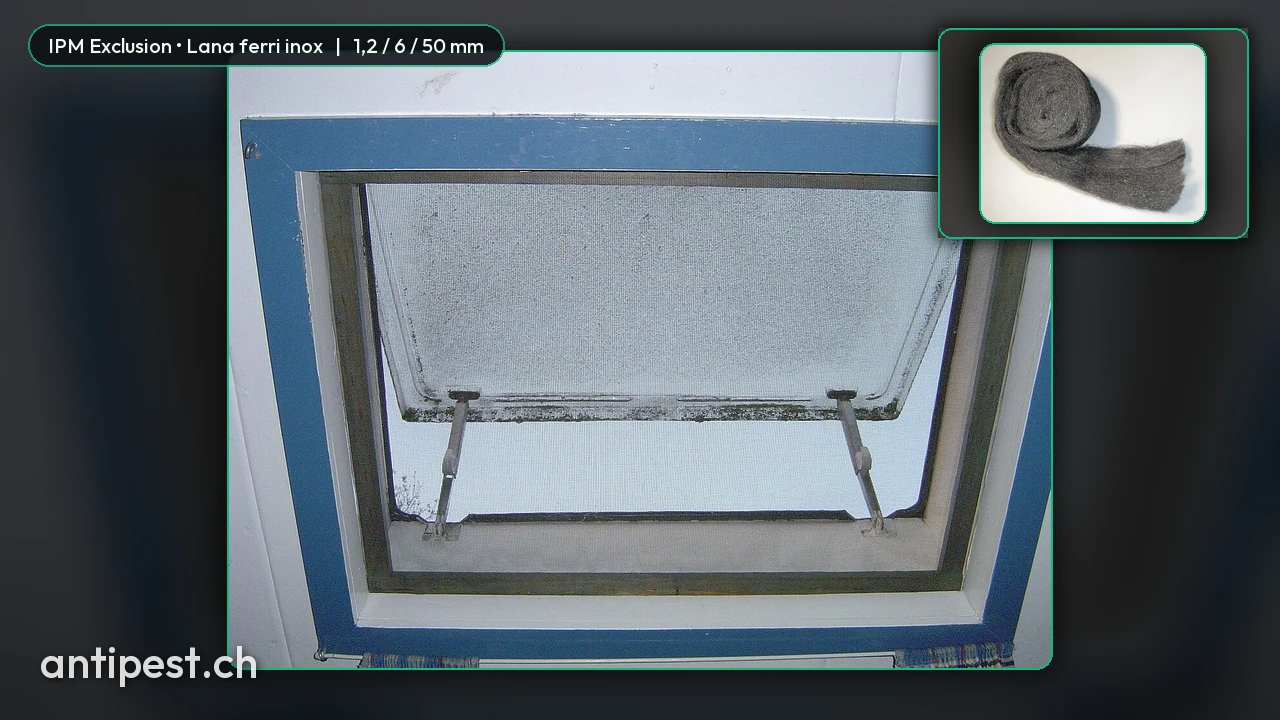
The best pest is the one that never enters the house: the exact gap dimensions (1.2 mm for insects, 6 mm for mice, 50 mm for martens) and why construction foam alone never protects against rodents.
Thermal Elimination: The +55 °C Heat & -18 °C Cold Threshold
No insect egg survives +55 °C for 60 minutes or -18 °C for 72 hours! How to use the oven, hairdryer, 60-degree wash, and freezer as a 100% residue-free bio chamber.
Kieselgur (Diatomaceous Earth): Physical Drying
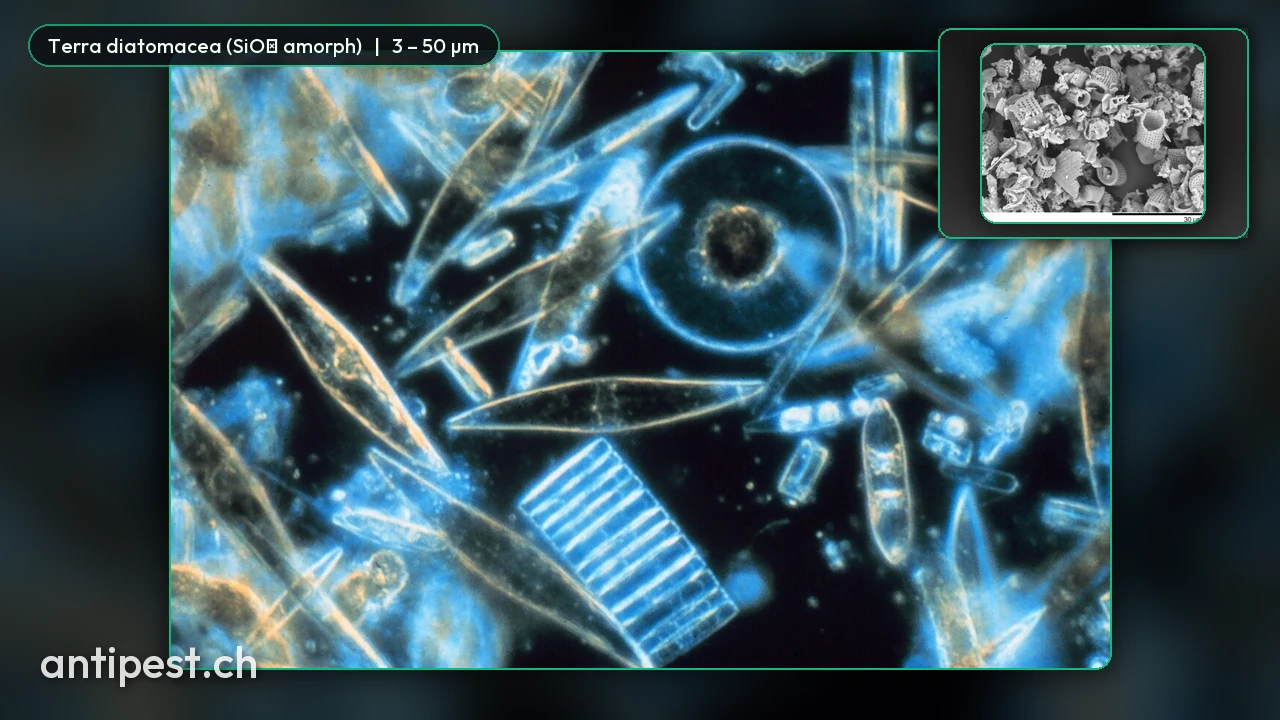
Microscopic shells of fossilized diatoms made of pure silica: Why kieselgur physically breaks the protective wax layer of silverfish, ants, fleas, and bedbugs.
🔬 Pest Biology & Identification
Species Identification, Lifecycle & Root Causes
Understanding species biology is key to solving the root cause. Click any dossier for the full analysis.
German & Common Wasp (Vespula germanica / vulgaris)
Out of 11 native wasp species, only these 2 species are interested in your cake plate and grill! Why you should never blow at them and how the coffee powder smoke bowl works.
European Paper Wasp (Polistes dominula)
Slender body, orange antennae, and long hanging hind legs in flight: the paper wasp builds small open nests without a covering, never goes for cake, and is a peaceful beneficial insect!
European Hornet (Vespa crabro): Protected Giant
Reddish-brown thorax, deep buzzing sound, and complete disinterest in sweet cakes: A single hornet colony devours half a pound of wasps, flies, and mosquitoes each day!
Roller Shutter Box & Attic Prevention in April
If you want to prevent a wasp nest in your roller shutter box in summer, act in April: how to non-violently deter searching young queens using brush seals, clove oil, and a paper nest decoy.